

Last Updated: November 14, 2026
Quick Summary
Top-rated dental milling centres in the UK prove precision with documented processes rather than adjectives: scheduled machine calibration, physical model fit verification before dispatch, logged sintering curves per zirconia batch, and retained production samples for traceability. Score each centre against six verifiable criteria, then send a single test case before committing to a contract.
- Ask for calibration logs, fit-check records and sintering programmes, not verbal claims of high precision.
- Score centres on marginal fit, calibration, sintering control, material range, wet and dry capability and commercial terms.
- Compare centres using the same three representative cases so quotes are genuinely like-for-like.
- Request lead time in working days per material and per restoration type, never a blended figure.
- Check the remake clause in writing, including who bears the cost of a failed fit.
Table of Contents
- What Separates Top-Rated Dental Milling Centres in 2026
- Dental Milling Services Compared: What to Look For
- Dental CAD/CAM Milling Technology and Workflow
- Zirconia Dental Milling: Materials and Aesthetic Outcomes
- In-House Dental Milling vs Outsourcing to a Centre
- Pricing, Lead Times and Remake Policies to Check
- Choosing a Milling Partner: Next Steps for Your Laboratory
- Frequently Asked Questions
What Separates Top-Rated Dental Milling Centres in 2026
Choosing a dental milling centre is a decision about trust as much as technology. Across the UK, dental milling centres vary widely in how they verify precision, which materials they stock, and how they handle a case that does not fit.
At TTC Labs, we supply equipment to dental laboratories and surgeons, and we provide installation, calibration and optimisation support. Below, we break down the criteria that predict a good restorative outcome, and how to test a centre against them.
Precision, Fit and Quality Control Evidence
Ask any milling centre how it proves accuracy. The strong ones answer with process, not adjectives.
A reliable centre will typically:
- Calibrate its milling machines on a documented schedule
- Verify fit on a physical model before dispatch, not only in software
- Log the sintering curve used for every zirconia batch
A common mistake is accepting a verbal assurance of "high precision" without asking what is measured and how often.
Materials and Restoration Range
The range of restorative material a centre holds tells you what case complexity it can genuinely handle. Zirconia covers single crowns through long-span bridges and full-arch work, while glass ceramics suit anterior aesthetics where translucency matters most.
A centre that stocks only one material will push every case toward it. Ask which materials are held in stock, which are ordered per case, and what lead time each adds.
Dental Milling Services Compared: What to Look For
Most roundups of dental milling services compare centres on brochure claims. A more useful comparison scores each centre against criteria you can verify before sending a case.
The six comparison criteria that predict restorative outcomes
Score each centre on each row, and record the evidence given.
| Criterion | What good looks like | Evidence to request | Why it matters |
|---|---|---|---|
| Marginal fit and tolerance | Stated tolerance for the restoration type, verified on a physical model | Fit-check records, model verification photos, tolerance specification | Marginal gap drives seating, cementation and longevity |
| Calibration and maintenance | Documented calibration schedule with logs | Machine calibration log, maintenance record, last service date | An uncalibrated mill produces drift that software cannot correct |
| Sintering control | Logged furnace curve per zirconia batch | Sintering programme record, furnace calibration certificate | Shade, translucency and strength all depend on the curve |
| Material range and stock | Zirconia, glass ceramic, hybrid ceramic and PMMA held or sourced with stated lead time | Stock list, per-material lead time, disc brand and layer structure | Determines which case complexity the centre can genuinely handle |
| Wet and dry capability | Both workflows in-house, with a cleaning routine between materials | Machine list, material-to-machine mapping, changeover procedure | Avoids outsourcing and cross-contamination between material types |
| Commercial terms | Written lead time, remake policy and file-return terms | Sample terms, remake clause, design file ownership statement | Protects against hidden cost and disputed responsibility |
How to run a like-for-like comparison
- Fix the case mix first. Choose three representative cases, a single-unit zirconia crown, an anterior glass-ceramic veneer or crown, and a multi-unit or implant-supported restoration, and ask every centre to quote and describe its process for the same three.
- Ask for the evidence behind each score. A centre claiming high precision should show the tolerance it works to and how it verifies fit before dispatch; one claiming fast turnaround should state lead time per material in working days, not a blended figure.
- Separate capability from capacity. A centre may own a five-axis mill with wet and dry modes but run it at capacity. Ask how many cases per week the relevant machine handles and what happens when demand exceeds it.
- Check the handover points. The weakest link is usually the handover between design, milling, sintering and finishing. Ask who inspects at each stage and what triggers a remake.
- Score, then discuss. A centre that scores well on materials but cannot show calibration records is a risk, however competitive its pricing.
Selection criteria and evaluation date
For a deeper look at how CAD/CAM system choice affects a centre's precision and workflow, our guide to the best CAD/CAM system for dental laboratories sets out the selection criteria in detail.
Watch out: a comparison built only on price and material list will rank a centre highly that cannot show a single calibration record, always weight the evidence rows before the commercial rows.
Dental CAD/CAM Milling Technology and Workflow
Dental CAD/CAM milling is the process of designing a restoration digitally and cutting it from a solid blank with a controlled milling machine.
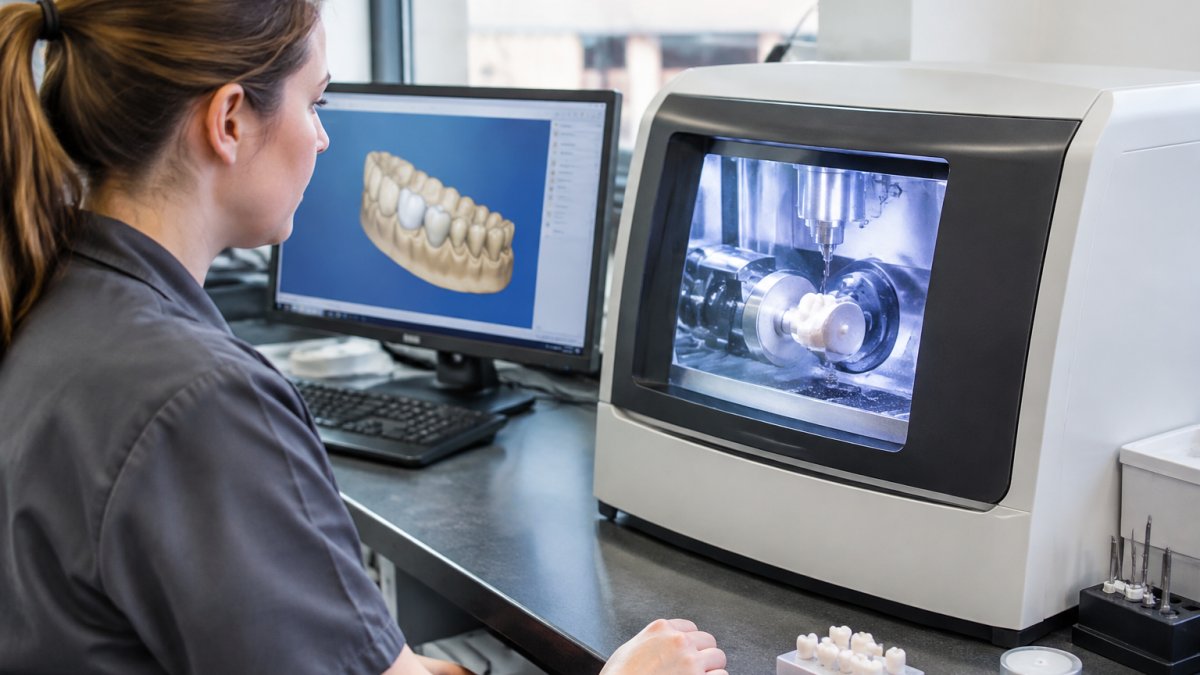
The technology matters more than the brand name on the machine. Results depend on mill maintenance and sintering control.
Wet and Dry Milling Capabilities
Wet milling uses coolant to cut softer materials such as glass ceramic and hybrid ceramics without heat damage. Dry milling suits zirconia and other hard materials where coolant would interfere with the process.
A centre with both capabilities can take on a wider case mix without outsourcing. Ask which materials are milled wet, which dry, and whether the same machine handles both, machines that switch modes need a thorough cleaning routine between materials.
Milling Machine Specifications and Automation
Features worth checking include the number of blank positions in the change system, whether tool management is automated, and whether the machine measures the blank before cutting.
Our guide to choosing dental milling machines that cut finishing time covers the specification details that translate into faster turnaround. Prioritise automated tool change and a tactile measuring system, because both remove manual steps where errors creep in.
Zirconia Dental Milling: Materials and Aesthetic Outcomes
Zirconia dental milling has moved well beyond opaque white crowns. By carrying shade and translucency through the restoration, multilayer zirconia can support reliable dental restorations that need less chairside adjustment.
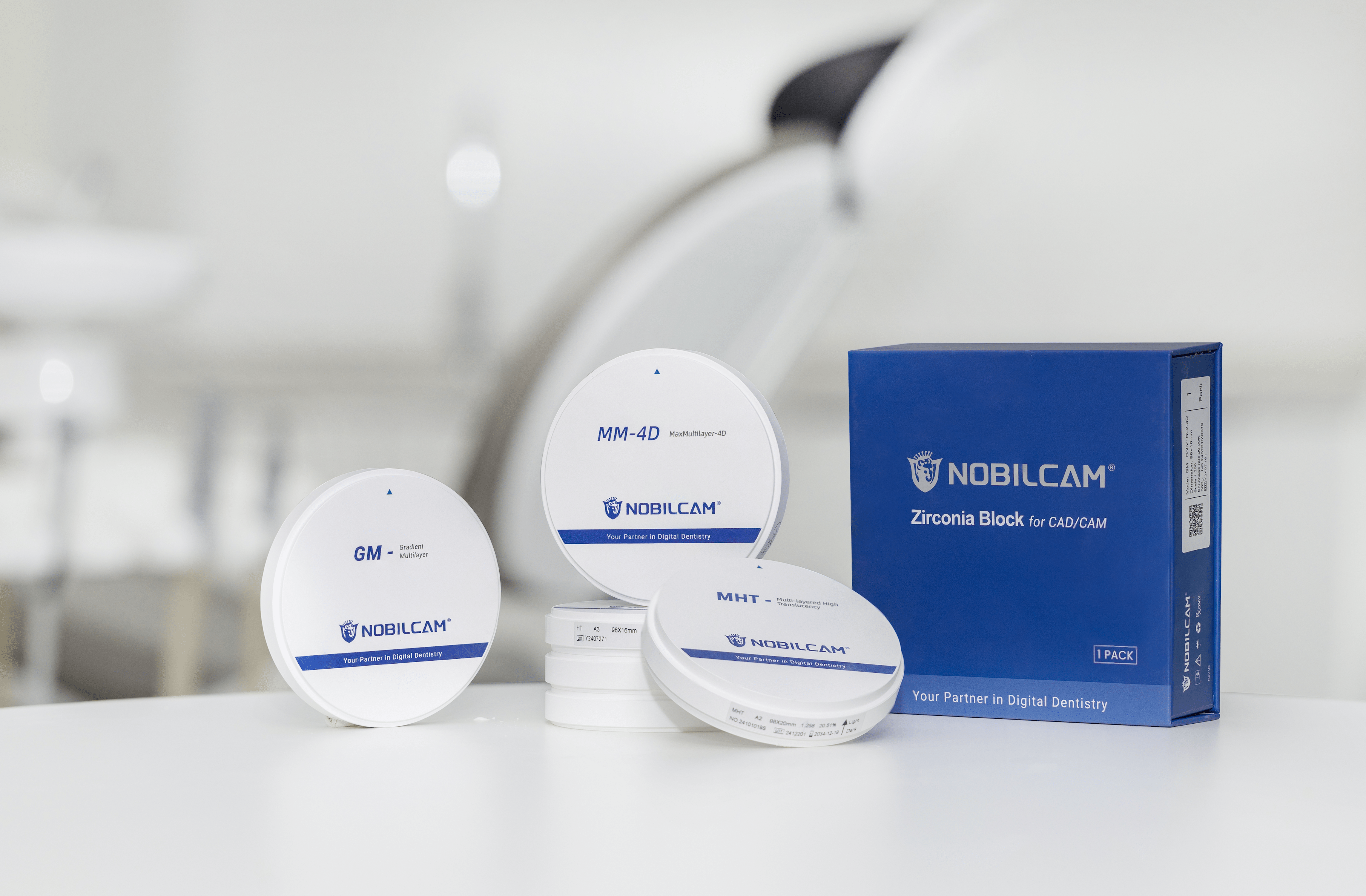
The NOBILCAM MM-4D MaxMultilayer Zirconia Discs are a multilayer zirconia with an eight-layer transition, translucency of 43% to 57% and strength of 700 MPa to 1200 MPa, suited to applications from single crowns to full-arch bridges.
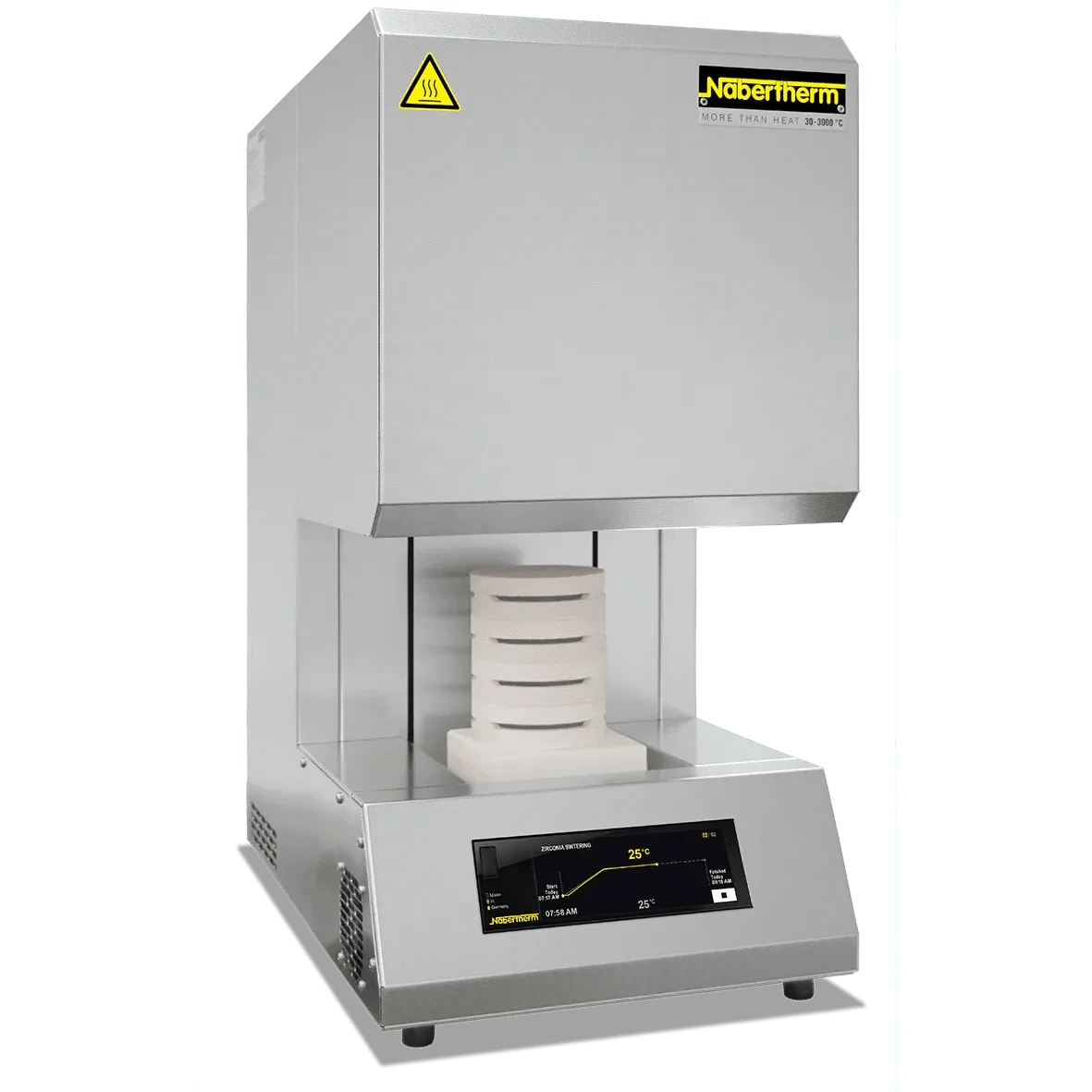
Aesthetic outcomes still depend on sintering. Furnaces such as the Nabertherm LHT 02/17 LB Speed Furnace, which reaches 1650 °C with all-round chamber heating for even temperature distribution. For urgent single-unit work, the Nabertherm LHT 01/16 Turbo Fire sinters up to three single crowns within one hour.
In-House Dental Milling vs Outsourcing to a Centre
In-house dental milling gives a laboratory control over turnaround and the ability to adjust a case mid-production.
The decision usually comes down to case volume and case mix.
Our in-house dental milling cost analysis works through the capital, consumable and maintenance figures so you can model the comparison against your own volume rather than a generic estimate.
Best for: laboratories moving from outsourcing to in-house production. Skip if: your case volume is low enough that a centre's lead time never constrains you.
Pricing, Lead Times and Remake Policies to Check
Commercial terms are where a milling centre's confidence shows. A centre that publishes its lead time per material and states who bears the cost of a failed fit has usually measured its own process.
Lead times by material and restoration type
Ask for lead time in working days, per material, and per restoration type, rather than a single blended figure. Record the answer in a table like this:
| Restoration type | Typical material | What to ask |
|---|---|---|
| Single-unit crown | Multilayer zirconia or glass ceramic | Working-day lead time from scan receipt to dispatch |
| Anterior aesthetic case | Glass ceramic or hybrid ceramic | Whether wet milling is done in-house and what finishing is included |
| Multi-unit bridge | Zirconia | Sintering cycle length and whether long-span cases are batched |
| Implant-supported restoration | Zirconia or hybrid | Design review steps and fit verification before dispatch |
| Provisional or try-in | PMMA | Whether the same workflow and machine are used |
A centre that quotes one lead time for everything is either batching work or has not separated its workflows. Both affect your planning.
Material-by-material machine and workflow suitability
The choice between wet and dry milling is a material constraint, not a preference. Wet milling uses coolant to cut glass ceramic, hybrid ceramic and some PMMA without heat damage; dry milling suits zirconia and other hard materials where coolant would interfere.
Ask which materials are milled wet, which dry, and whether the same machine handles both. If it does, ask for the cleaning routine between materials.
Remake policy: what a fair clause looks like
Remake policy is the clause most buyers read last and wish they had read first. A fair clause should state:
- Who bears the cost when a restoration fails to seat, and on what evidence that is decided
- Whether the design file is returned to you so you can remake elsewhere
- The notice period for pricing changes
Ask for the clause in writing before committing, and test it with a single case rather than a contract.
Indicative pricing structure and consumables
Pricing varies with material, restoration type and case complexity, so treat any single figure with caution. Budget for replacement burs, such as the D653-2IB2520 (T13) Paragon Milling Tool at £73.00, a 2.5 mm ball burr with a 6 mm shank for zirconia milling.

Our guide to reducing dental milling remakes covers the production habits that cut failure rates, most of which sit inside your own workflow rather than the centre's.
Watch out: a low per-unit price with an unclear remake clause often costs more over a year than a higher price with a written responsibility split, compare total cost of ownership, not the headline figure.
Choosing a Milling Partner: Next Steps for Your Laboratory
Start with a single test case rather than a contract. Send a representative restoration, measure the fit yourself, and ask for the calibration and sintering records that produced it.
Then check the support behind the equipment, including installation, calibration and optimisation, which TTC Labs provides.
A milling partner should make your restorative outcomes more predictable, not add a variable you cannot control.
Frequently Asked Questions
What does a dental milling centre do?
A dental milling centre produces restorations such as crowns, bridges and implant components from digital design files. It uses CAD/CAM software and milling machines to cut the restoration from materials like zirconia or ceramic, then handles sintering and finishing. For dental laboratories, a centre extends capacity without the capital cost of equipment, while maintaining the precision and fit needed for restorative work. The centre's quality control and material range directly affect the final restoration's accuracy and aesthetics.
How do you choose a dental milling centre for high-precision restorative outcomes?
Look at precision evidence first: how the centre verifies fit and marginal accuracy, and whether it shares quality-control data. Check the materials it mills, including zirconia and ceramics, and whether its machines handle wet and dry milling for your case mix. Ask about turnaround times, remake policies and the real cost of consumables and support. A centre that explains its calibration routine and offers hands-on demonstrations is easier to trust for long-term restorative outcomes.
What affects the accuracy of a milled dental restoration?
Accuracy depends on the scanner's resolution, the CAD design, the milling machine's calibration and the material's behaviour during sintering. A machine that drifts after months of use causes remakes, so ask how often the centre calibrates and whether it uses tactile measuring systems. Temperature uniformity in the sintering furnace also matters for zirconia, because uneven heating can distort fit. Together, these factors determine whether a restoration seats passively or needs chairside adjustment.
What is the difference between in-house milling and outsourcing?
In-house milling means your laboratory owns the machine, software and furnace, giving you control over turnaround and design changes but requiring capital outlay and trained staff. Outsourcing to a milling centre removes that capital cost and gives access to a wider material range and industrial capacity, but you depend on the centre's lead times and quality control. Many laboratories combine both, milling simple cases in-house and sending complex implant or full-arch work to a centre with specialised equipment.


